
Five things to remember when including residents voices in decision making
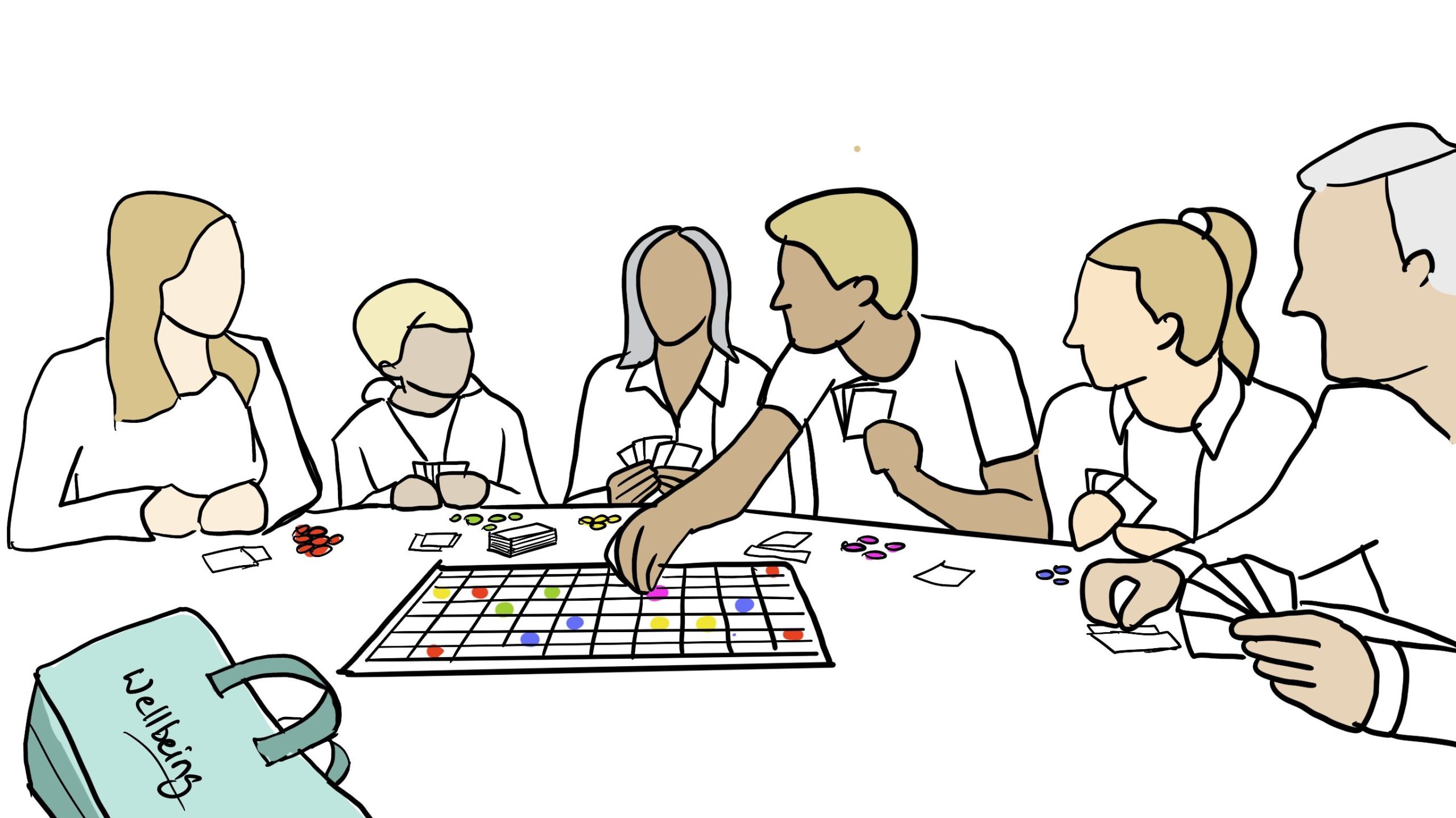
Listening is at the heart of what we do at Neighbourly Lab. We listen deeply to residents, we encourage community organisations to voice their ideas creatively, and we invite those staff members who are responsible for delivery to share their experiences honestly. We then package this up for decision-makers to transform their services.
Including a diverse set of voices into policy and praxis helps means projects and services are more likely to be effective, efficient and sustainable than with more of a ‘top down’ implementation approach. Many organisations are starting to co-produce with residents and staff, which we applaud wholeheartedly in principle, but as practitioners who have done this for a long time, we are concerned that this is done well, ethically, equitably and therefore, in practice, they need to be aware of potential ‘watch outs’.
Participatory engagement techniques are by their very design, inclusive and accessible, so can work with everyone – whatever their age. For example, in the last few weeks we have run workshops with 11 -15 year olds in schools about the future of their city; with residents in community spaces about housing solutions as well as hosting smaller sessions with older residents, in sheltered accommodation about reducing their loneliness. In our experience, it is less a question of who can participate – as developed well, participatory sessions are welcoming and good for most- it is more important to think about how the inputs of those participating will be used to inform strategy; whether there is Senior Leadership buy-in and any capability to invest in building better relationships with our different communities?
So below are some of our biggest ‘watch outs’, thought starters for when you want to do participatory work with residents – whether that is co-production, co-design, co-creation or workshops
1) This type of work is about trust and relationships. Easy to break, hard to build
This is at the heart of true participatory work. Its purpose is to learn and build trust so that in the long run, we transform our places for the better. The trust between authorities and the community is fragile, and getting people involved may feel difficult. It is worth spending time building relationships, and being open to bumps in the road.
2) Committing to taking action at the start of the process is essential
Don’t do participation, if you’re not really going to listen and take action afterwards – this breaks trust, and can damage the relationships with your communities you may not know what it looks like
3) Bespoke session design is key
What matters is how you design the session. Whilst the techniques you use may be similar, each session needs its own design that supports the content and context properly. This often needs careful thinking about and preparation, but is worth the time upfront. The activities, facilitation, room layout, participant remuneration, snacks and drinks, explaining how the work will be used, having clients present and knowing their role. Setting everyone up for success will allow for a smoother session.
4) Feeling comfortable that we don’t have all the answers is important
Many people worry that residents may ask difficult or challenging questions, things that have nothing to do with your job or department, things you may know nothing about. That’s ok. We need to start getting used to sharing power and allowing residents to voice questions and ideas. It may be difficult, but listening and learning from residents as they share ideas is a privilege.
Holding space to really lean in and listen to residents about what’s important to them is one way of shaping our places for the better. We get to the heart of what really matters, through what is being said and what is meant. We receive glimmers of hope, moments of optimism and practical solutions that we had never thought about
5) You many not always need to engage residents and VCS
It is important not to add any further burden on the community – residents or organisations, as they can feel over-consulted. It is always worth asking internally whether there is other data available to support decision making and whether similar initiatives have taken place, or are about to, and combine efforts. There’s value in working together with other teams.
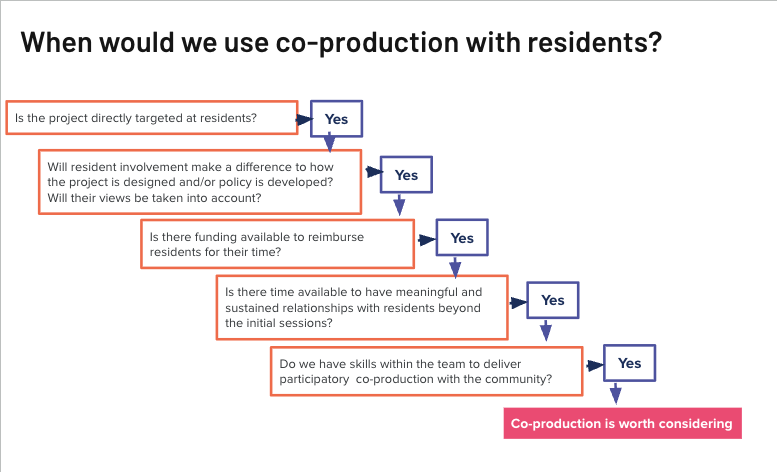
This flow diagram may help you to decide whether to use participatory methods to engage residents
For more information please contact Marnie – marnie@neighbourlylab.com