
Notes from the Field: Welcome, Care and the Quiet Architecture of Welcome in Bristol
As part of the Welcome Coalition’s Mapping and Evaluating Welcome Services and Networks across the UK, our research team has just come back from fieldwork in Bristol, where they were exploring how welcome is delivered in practice. We worked to identify who is involved, how ecosystems function and how newcomers actually move through these networks.
Bristol, as the first of 3 ethnographic deep-dive locations in this project (the subsequent locations are Renfrewshire and Devon), has been an amazing start, giving us an understanding how Welcome is expressed and support offered at a local level.
Below is a summary of our notes from the field.
Landing in Bristol, launching the fieldwork.
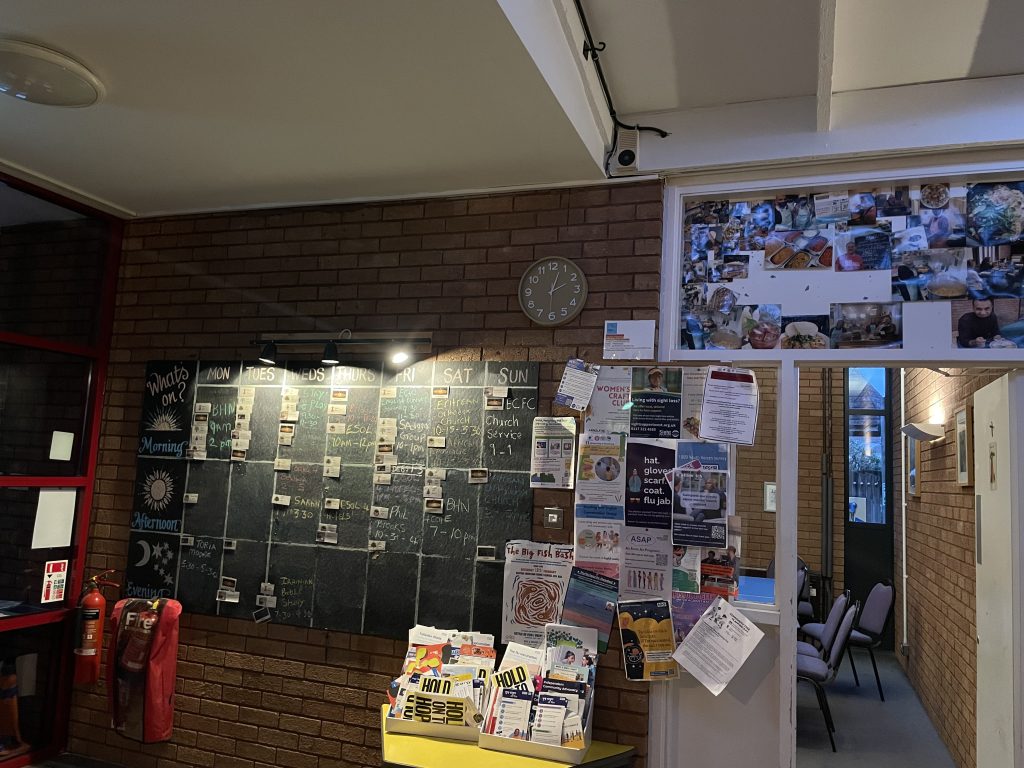
Arriving in Bristol, it quickly became clear that this was a place where people care for their neighbours and want what’s best for their community. The reputation Bristol enjoys as a warm and welcoming city is well-earned, with community leaders, bus drivers and cafe staff alike giving a friendly smile.
Before diving into the fieldwork, we touched base with our partners at Good Faith Partnership, who shared their insight and understanding of the city. They outlined the local context of Welcome in the city: whilst many of the policies which impact newcomers in Bristol have been in place for years, the current political climate and reduced funding opportunities has meant practices have had to adapt, with a renewed focus on sustainability.
The places we visited varied in setting and atmosphere, each offering a distinct insight into how the work is understood and enacted in practice. For example, the scene in the Bristol Hospitality Network drop-in was full of noisy and happy interactions – with people playing Scrabble while others had their hair cut – while in Aid Box Community Hub it was quieter – with people visiting the free shop and speaking with staff. What these places have in common however is the dedication of the staff and volunteers.
From our conversations with service leads, including those running the Easton Christian Family Centre and the Bristol Refugee and Asylum Seeker Partnership (BRASP), it was clear that in some areas, Bristol has a dense, relational ecosystem. Welcome is delivered less as isolated services and more as interconnected spaces, with awareness of available support spreading largely through word of mouth.
Many of the service-users that we spoke to across our visits expressed how important these interconnected spaces are. Being able to visit a local centre, share food with their friends, speak in their native language and receive essential advice at the same time has allowed them to feel more comfortable, connected to and welcome in Bristol, and has supported their multi-faceted, individual needs in a flexible and relaxed way.
In the south of Bristol, the picture was different. These opportunities for organisations to collaborate and develop into more visible Welcome infrastructure weren’t as frequent. In areas like Hartcliffe, whilst the community continues to welcome newcomers and services offer support, the overall Welcome landscape was quieter than that in Easton, which has spent many years building up these collaborative systems of Welcome.
Insights emerging from the field
Across all of the site visits and interviews (both intercept and in-depth) that we carried out over the 2 days, three things stood out most:
- The value of Welcome spaces to support people to move on in their journey from receiving support to offering support to others. Therefore, the ecosystem feels less transactional and more reciprocal.
- The important role of volunteers who give their time and energy to support newcomers. All those involved in the Welcome process are key in connecting organisations and signposting newcomers to other opportunities.
- The relational nature of the system and how support is delivered in spaces that newcomers already use. Although some organisations describe their work as ‘crisis support’ or ‘connection’, in practice, the boundary is often blurred. The result is that a place of warmth with a cup of tea and volunteering opportunities or legal advice often sit side by side.
Current short-term funding models have created challenges for those delivering crucial Welcome services to newcomers; maintaining organisational capacity and infrastructure, rather than collaboration, has brought about greater instability beneath otherwise successful delivery. Nevertheless, these services continue to offer support, advice and information to those most vulnerable in their communities. Therefore, protecting these services as safe, care-centred environments is seen as essential.
What’s next for the fieldwork?
As we move on to our next ethnographic deep-dive in Renfrewshire, we’re keen to explore how smaller, less recognised networks fit into the wider ecosystem of Welcome.
We are also digging deeper into how relocation disrupts belonging, how relationships can be sustained across places and, more broadly, how the offer of welcome builds into practices of wider social cohesion.
If you are interested in learning more about this work or other projects we are doing as part of our Accelerating Welcome mission area, please reach out to beth@neighbourlylab.com.